Things to do
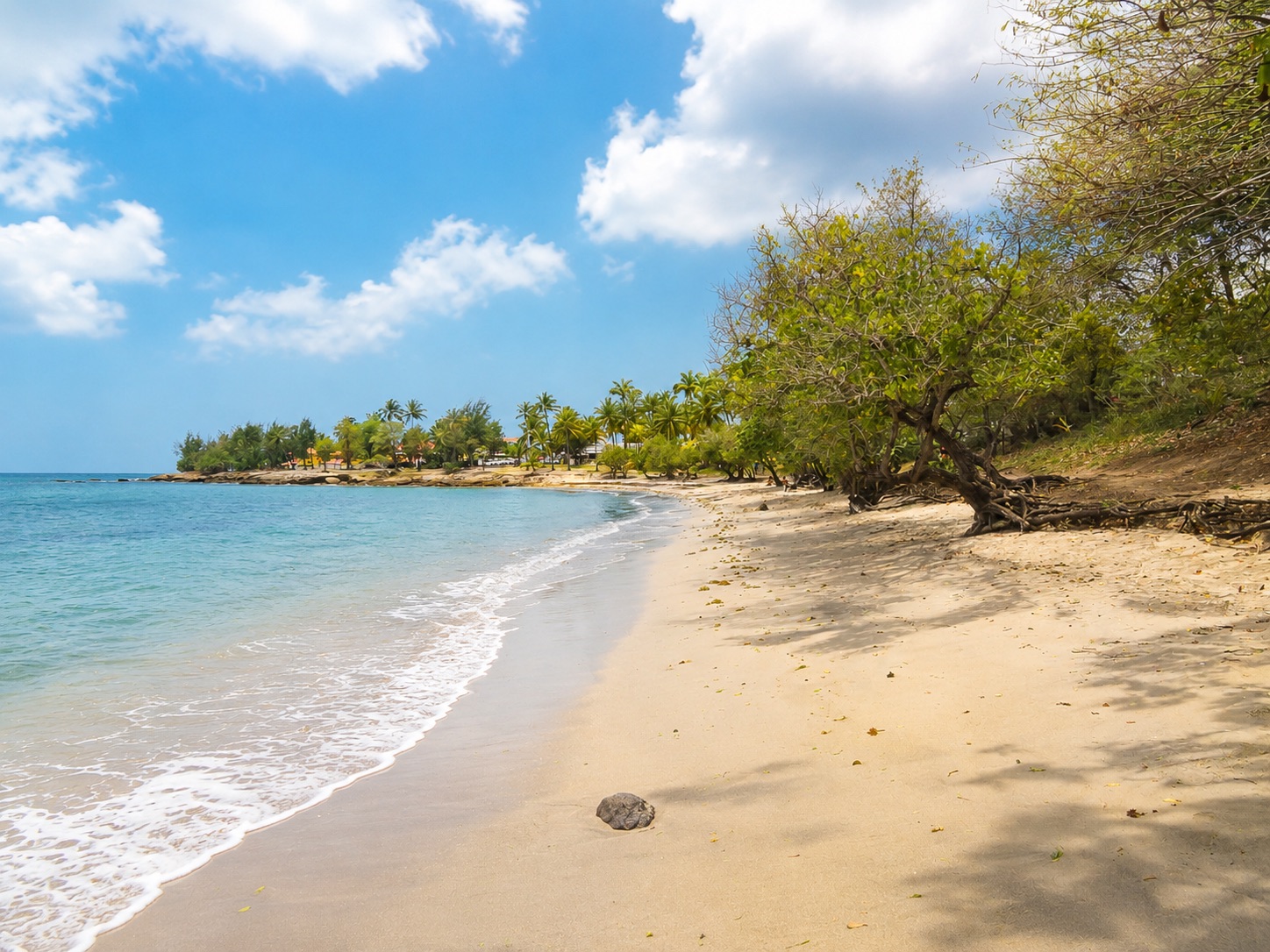
No checklist, no timed itinerary. Just the markets, the trails, the dishes, and the small habits that make up real life here — around Sainte-Luce, a stone's throw from the house.
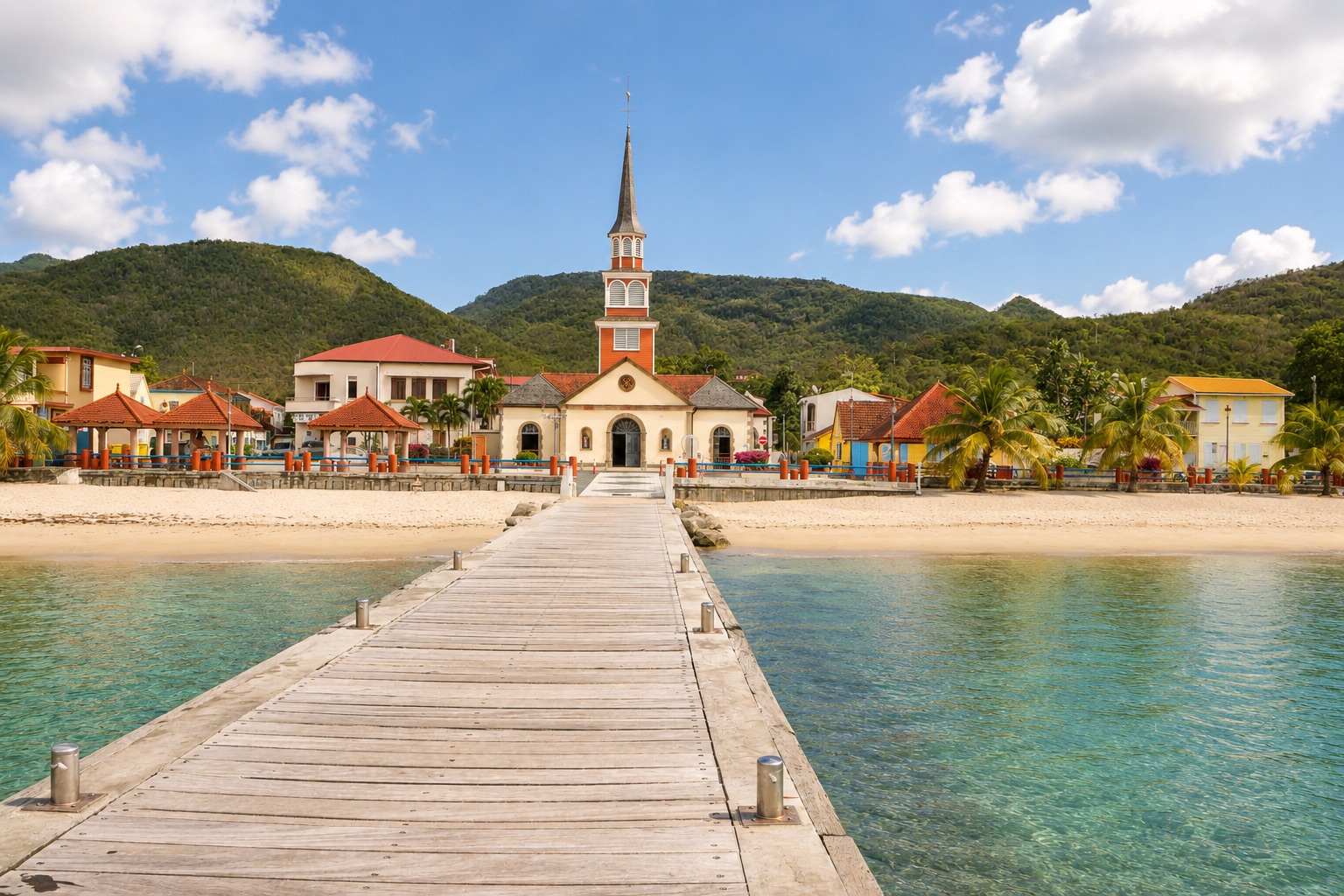
We could have listed the ten beaches you shouldn't miss. We'd rather give you what we actually use ourselves when we're here: the Friday morning market, the trail we take to walk off a meal, the distillery down the road, and a couple of local habits that help you avoid faux pas. You'll discover the rest perfectly well on your own.
🧺 The local markets
The best time to feel the local rhythm: early morning, before the sun gets too strong and the best stalls sell out.
Marché de Sainte-Luce
Covered market with local producers: fruit, vegetables, spices, a few craft stalls. Friday morning is the best time — stalls are the most stocked and the atmosphere is still calm. It's the one we go to ourselves, almost every week.
Marché de Rivière-Pilote
One of the liveliest markets around, more local and less known to visitors. A good option if you miss the Sainte-Luce one or want to compare prices.
Marché du Marin
Covered market, open every day of the week — handy if you're after fruit, vegetables and crafts on a day other than the weekend. Worth combining with a walk around the marina right next door.
Marché des Trois-Îlets
Covered market on the church square, more focused on crafts. On Saturdays, a roaming market moves between Anse à l'Âne, the town centre and Pointe du Bout.
🥾 Stretch your legs
Two quite different options: one a stone's throw from the house for a gentle walk, another for those wanting a full day on the trails of the south.
Forêt de Montravail
70 hectares of rainforest in Sainte-Luce, a few minutes from the house. Family-friendly, shaded, no real difficulty — perfect for a post-meal walk or to keep the kids busy for an hour or two.
- Yellow loop — 1 km, very easy
- Green loop — 1.4 km
- Orange loop — 3.5 km
- Red loop — 4 km
Monumental wooden sculptures along the main path, the Roches Gravées site (visible when the owner is present), 3 picnic areas. Good shoes recommended, and it's best to avoid right after rain — it gets slippery.
La Trace des Caps
Martinique's longest coastal hike: 34 km between Sainte-Anne and the Sainte-Anne peninsula in the south of the island, no technical difficulty but very little shade — bring plenty of water. We do it in sections rather than all at once:
- Petit Macabou → Cap Macré — 5 km, 2h30
- Cap Macré → Cap Chevalier — 7 km, 3h
- Cap Chevalier → Baie des Anglais — 6.5 km, 3h
- Anse Trabaud → Les Salines — 5 km, 2h
- Les Salines → Anse Caritan — 4.5 km, 1h30
Allow 30–40 min drive from the house to reach one of the starting points. Plan to have a car waiting at the end if you're combining several sections.
🥃 Rum, just down the road
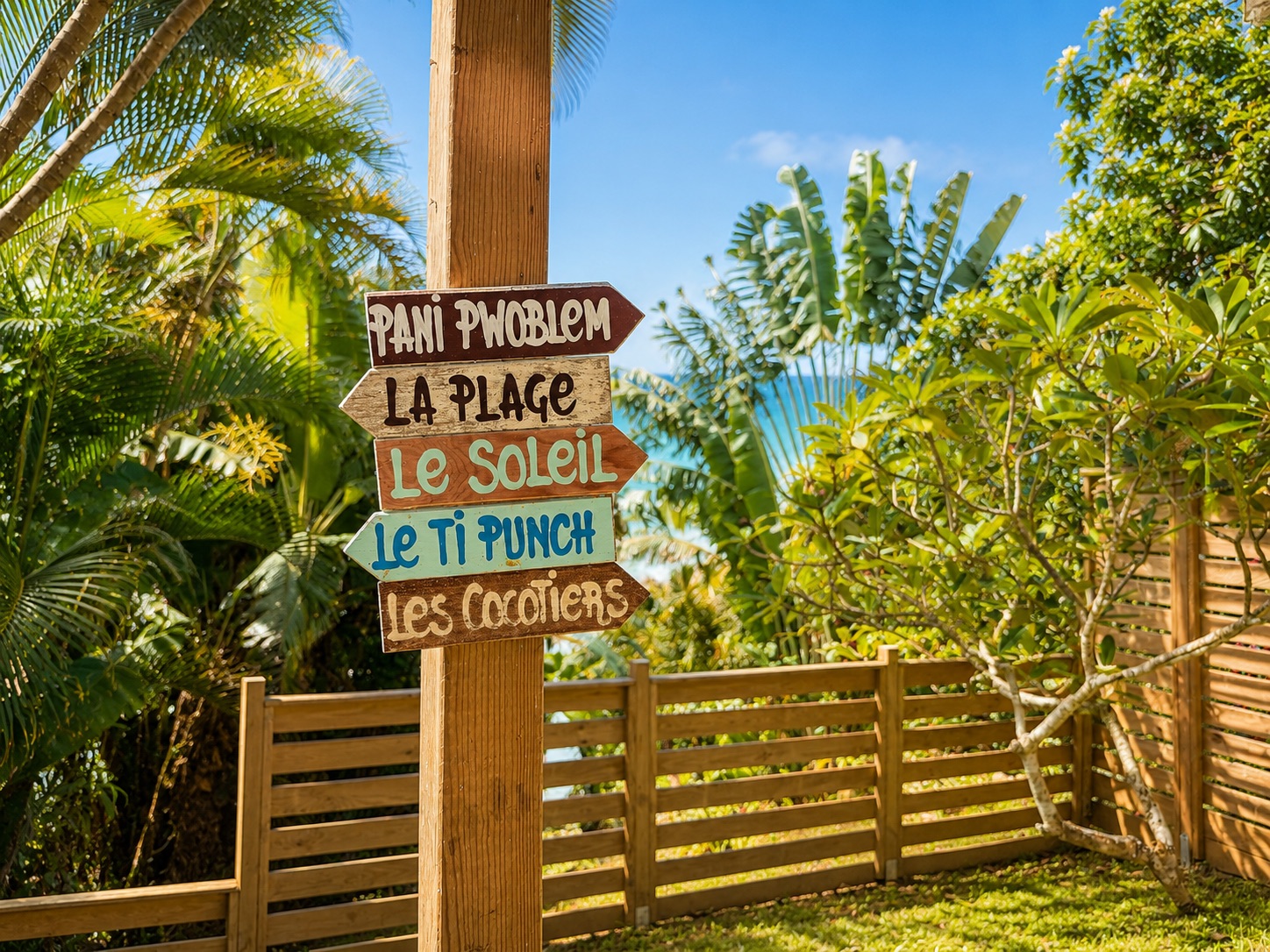
The Trois-Rivières distillery is literally in Sainte-Luce, on the way to the beach — one of the island's oldest plantations (founded around 1660). Access to the mill, shop and craft stalls is free.
Paid guided tours run Monday to Saturday at 10am, 11am, noon, 2pm, 3pm and 4pm (site open 9am–5:30pm), with a complimentary tasting for over-18s. Check prices and times before heading over, as they can change in the low season.
🍽️ What to try
At the markets, in a small local eatery, or straight from a beach vendor — here's what we recommend trying at least once.
Accras de morue
Small deep-fried cod fritters with flour, shallot and chili. Crispy outside, soft inside — perfect with drinks alongside a ti-punch.
Colombo (de poulet)
The iconic slow-cooked dish, inherited from Indian workers who arrived in the 19th century. A spice blend (cumin, coriander, turmeric, nutmeg) found in every Creole restaurant.
Féroce d'avocat
Mashed avocado, flaked cod, cassava, lime and chili. Simple, fresh, fierce — just as its name suggests.
Blaff de poisson
Fish marinated in lime and spices, poached in a fragrant broth. Served with rice, local vegetables or plantain.
Boudin créole
Black pudding spiced with chili and four-spice blend, traditionally served warm as an appetizer, with ti-punch.
Sorbet coco
Coconut milk, sugar and sometimes a touch of lime or cinnamon, hand-churned in a wooden sorbet maker. The dessert that never disappoints.
If you're here around Easter, look out for matoutou de crabe — a land crab stew with rice and spices, made especially for the occasion.
🍋 Ti-punch, a real art
Three ingredients, a true ritual. Here's how it's made around here, and the couple of rules to know so you don't stand out.
The recipe
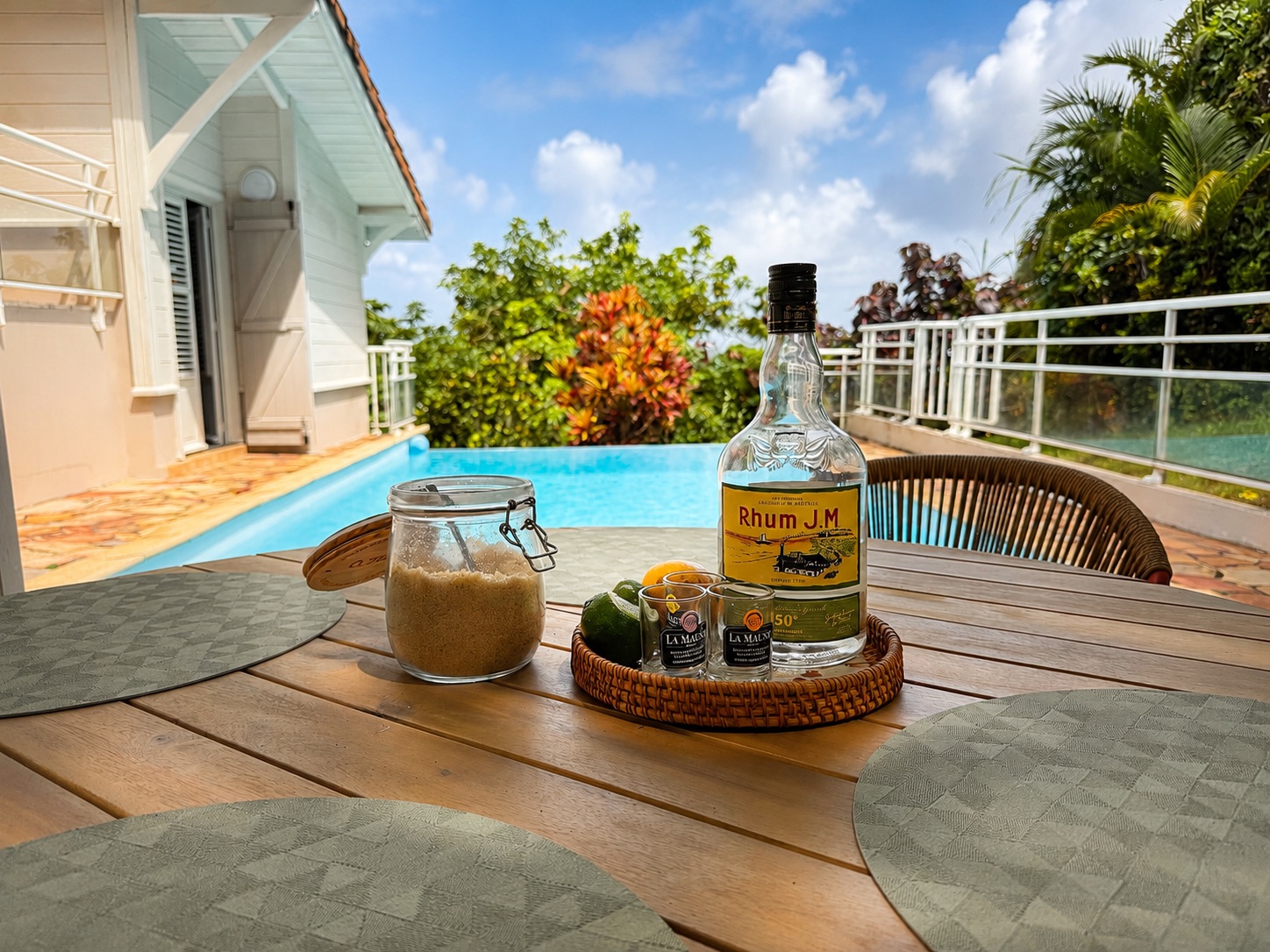
White agricultural rum, cane sugar (or syrup), lime — in that order, roughly 5 cl of rum to one spoon of sugar and half a lime. You gently squeeze the zest over the glass before dropping the lime in: the famous "squeeze-and-drop". Stir with a bois-lélé (wooden swizzle stick) until the sugar dissolves.
The rules to know
No ice. Ever. The rum settles better that way, or so they say here.
You serve yourself. The host puts rum, sugar and lime on the table; everyone measures to their own taste.
It's drunk from the glass, no straw, and you take your time.
💡 Our resident tips
Nothing complicated, just things that took us a little time to figure out when we arrived.
- Many shops slow down or close during the hottest hours (around noon–3pm): it's best to do your shopping early in the morning.
- Some shops are closed Sunday afternoon and sometimes Monday — stock up on bread and fruit on Saturday if needed.
- To enjoy the nearby beaches without the crowds, go early morning or late afternoon.
- Agricultural rum is sipped neat, in a small glass, never in one gulp: you make it last.
- On the road, people rarely honk but will happily park anywhere on the shoulder near the markets — stay patient, it clears up fast.